Is Employee Ownership Right for Your Business?
What is this guide?
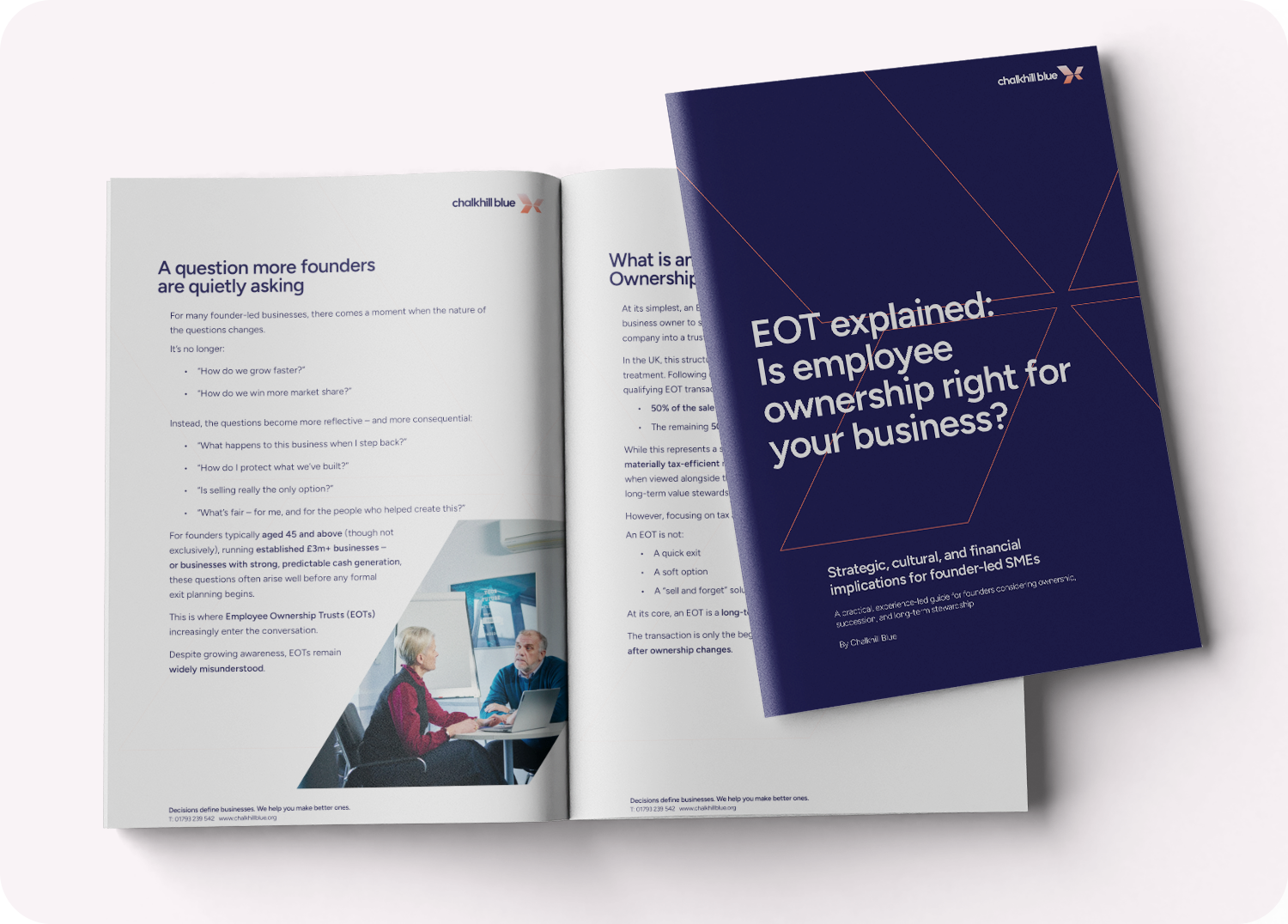
A strategic, financial, and cultural guide to Employee Ownership Trusts (EOTs).
Who is it for?
Founders exploring succession, legacy, and alternatives to trade or PE exits.
When should you read it?
If a traditional sale doesn’t feel aligned—but you still want a structured exit route.
What you’ll learn
- What an EOT actually is (and what it isn’t)
- When EOTs work well—and when they don’t
- The cash-flow realities founders must understand
- Why governance matters more than tax relief
Key insight:
EOT success depends on governance and cash flow, not tax incentives.
Download the guide
Fill out the form below to receive your free copy of “EOT Explained: Is Employee Ownership Right for Your Business”.
Common founder questions
Are EOTs mainly about tax efficiency?
No. Tax benefits are secondary to affordability, leadership maturity, and governance.
Will an EOT really protect the culture long term?
Only if the business has strong leadership and decision-making structures in place.
What size business is suitable for an EOT?
Typically £3m+ turnover, or businesses with strong, predictable cash generation.
Can founders remain involved after an EOT?
Yes—but roles and expectations must be clearly defined.